The Fairly OddParents: Enter The Cleft (GBA)

Help Timmy Turner rescue his favorite comic book hero in this wacky platformer game. Battle against various villains in Fairly OddParents! – Enter the Cleft! Transform into Boy Chin Wonder and enter the world of comics and heroes.

Fairly OddParents! – Enter the Cleft is a wacky action platformer based on the characters of the TV animation Fairly OddParents. In this game, Timmy Turner’s favorite comic book hero named the Crimson Chin has been captured by his enemies. Too worried to wait for the next chapter of the comic, Timmy Turner went inside the comic as Boy Chin Wonder with the goal of rescuing his favorite hero. Help Timmy make his way through the end of each comic strips to meet his heroes!

For Gameboy Advance (GBA) emulators you can find it under Spotlight.

Monster House (GBA)

The game picks up from the part of the film where D.J., Chowder and Jenny escape out of a police car, only to be eaten by the house. The three are separated, and while looking for each other, are attacked by enemies constructed out of the building's interior architecture.

Obstacles include pipes that can block doors or pathways to keep the player on track, tentacle-like pipes that can harm the player, trees that can try to grab the player, objects that can fly at the player, spotlights from windows that can awaken monsters to attack the player if they're caught, and giant pipe monsters that can suck up the player. 

For Gameboy Advance (GBA) Emulators click the Spotlight widget and search under Emulators

Monster House (GBA)

The game picks up from the part of the film where D.J., Chowder and Jenny escape out of a police car, only to be eaten by the house. The three are separated, and while looking for each other, are attacked by enemies constructed out of the building's interior architecture.

Obstacles include pipes that can block doors or pathways to keep the player on track, tentacle-like pipes that can harm the player, trees that can try to grab the player, objects that can fly at the player, spotlights from windows that can awaken monsters to attack the player if they're caught, and giant pipe monsters that can suck up the player. 

For Gameboy Advance (GBA) Emulators click the Spotlight widget and search under Emulators

SpongeBob SquarePants: Legend Of Lost Spatula (GBC)

The game's story centers on SpongeBob SquarePants, a sea sponge who lives in the undersea town of Bikini Bottom and works for Mr. Krabs as the fry cook of the Krusty Krab fast food restaurant. SpongeBob is destined to become the ocean's greatest fry cook, and must embark on a quest to retrieve a golden spatula from the Flying Dutchman, a pirate ghost. The game features platforming-style gameplay, as well as many characters from the television series.

For Gameboy emulators like My OldBoy or Ultra GBC scroll down under Insidus Lite.

The Simpson's History With The Gameboy With Game Included

Acclaim Entertainment teamed with Imagineering to release Bart Simpson's Escapes From Camp Deadly in 1991. The summer camp horror story was notable released before the show's intake of this idea in the season 4 episode titled Camp Krusty.

Acclaim Entertainment then also rushed out the continuation of Bart's handheld conflict in 1992 with The Simpsons: Bart Vs. The Juggernauts. The game's designers pulled out the idea from the most sacred of institutions which was American Gladiators.

Later that year, the handled Krusty's Funhouse also by Acclaim Entertainment was shipped on Gameboy. It was an impressively huge puzzle game featuring as many brain twisting levels as the console and computer versions.

It took a short break when the Bart mark started a waver and came back in 1993 with Itchy & Scratchy In Miniature Golf Madness. Surely these kids were clambering to have these two violent characters to play in an orderly game.

Itchy And Scratchy In Miniature Golf doesn't end with a bang but a whimper as Acclaim Entertainment exits the Gameboy with Bart And The Beanstalk in 1993. The game merges the existing universe of The Simpsons television series with the fairy tale of Jack and the Beanstalk.

Uncovered by Bartmania, THQ and Software Developer released what is the most memorable games in the Simpsons franchise titled The Night Of The Living Treehouse Of Horror in 2001. In colour and featuring the entire family released too late to make much of a splash.

The Simpsons made a leap to the Gameboy Advance courtesy of the THQ and Voltron with The Simpson's Road Rage in 2003. Based on the fun and fully 3D, the console game developed by Radical Entertainment plays like the paper craft taxi racing game you never wanted.

In total, The Simpsons managed to immense amount of 7 handheld games which is impressive for any handheld series.

Credits: Noiselandco

The Simpson's History With The Gameboy With Game Included

Acclaim Entertainment teamed with Imagineering to release Bart Simpson's Escapes From Camp Deadly in 1991. The summer camp horror story was notable released before the show's intake of this idea in the season 4 episode titled Camp Krusty.

Acclaim Entertainment then also rushed out the continuation of Bart's handheld conflict in 1992 with The Simpsons: Bart Vs. The Juggernauts. The game's designers pulled out the idea from the most sacred of institutions which was American Gladiators.

Later that year, the handled Krusty's Funhouse also by Acclaim Entertainment was shipped on Gameboy. It was an impressively huge puzzle game featuring as many brain twisting levels as the console and computer versions.

It took a short break when the Bart mark started a waver and came back in 1993 with Itchy & Scratchy In Miniature Golf Madness. Surely these kids were clambering to have these two violent characters to play in an orderly game.

Itchy And Scratchy In Miniature Golf doesn't end with a bang but a whimper as Acclaim Entertainment exits the Gameboy with Bart And The Beanstalk in 1993. The game merges the existing universe of The Simpsons television series with the fairy tale of Jack and the Beanstalk.

Uncovered by Bartmania, THQ and Software Developer released what is the most memorable games in the Simpsons franchise titled The Night Of The Living Treehouse Of Horror in 2001. In colour and featuring the entire family released too late to make much of a splash.

The Simpsons made a leap to the Gameboy Advance courtesy of the THQ and Voltron with The Simpson's Road Rage in 2003. Based on the fun and fully 3D, the console game developed by Radical Entertainment plays like the paper craft taxi racing game you never wanted.

In total, The Simpsons managed to immense amount of 7 handheld games which is impressive for any handheld series.

Credits: Noiselandco

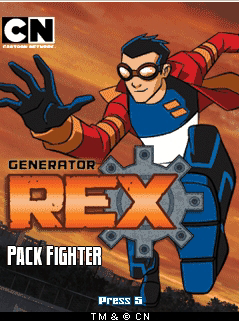
Generator Rex: Pack Fighter: Cartoon Network's Version Of Street Fighter Is On Android Devices

Generator Rex is an American animated science fiction television series created by Man of Action for Cartoon Network, with John Fang of Cartoon Network Studios as supervising director. It was inspired by the comic M. Rex, created by Aaron Sowd, Joe Kelly and Duncan Rouleau, and published by Image Comics in 1999. 

Pack Fighter is a one-on-one versus fighting game. Take on the role of Rex Salazar, an E.V.O. with the ability to control his nanites and fight members of The Pack, a group of E.V.O.s working under the command of Van Kleiss.

Scooby-Doo Mystery (SEGA)

The player controls Norville "Shaggy" Rogers, who is followed around by Scooby, while Fred, Daphne, and Velma make brief appearances, often at the beginning and end of a mystery. The object of the game is to solve puzzles to progress, uncover the mystery and catch the monster/criminal to win the scenario. 

Scooby-Doo Mystery (SEGA)

The player controls Norville "Shaggy" Rogers, who is followed around by Scooby, while Fred, Daphne, and Velma make brief appearances, often at the beginning and end of a mystery. The object of the game is to solve puzzles to progress, uncover the mystery and catch the monster/criminal to win the scenario. 

The Simpsons: Night Of The Living Treehouse Of Horror (GBC)

The Simpsons: Night of the Living Treehouse of Horror is a platform game published by THQ on March 19, 2001, for the Game Boy Color. Developed by Software Creations, it is based on the Treehouse of Horror episodes of the animated television series The Simpsons. The game features seven side-scrolling levels in which the player controls the members of the Simpson family. Night of the Living Treehouse of Horror has received average reviews from critics, with praise directed at the design.

Another Disney Franchise Also Reimagined For The Gameboy Universe, Club Penguin


Club Penguin was a massively multiplayer online game (MMO), involving a virtual world that contained a range of online games and activities. It was created by New Horizon Interactive (now known as Disney Canada Inc.). Players used cartoon penguin-avatars and played in an Antarctic-themed open world.

This game is a recreation of the beloved Club Penguin island into the Game Boy console. Have in mind this release is only a demonstration and not all rooms are available.

Also no music yet.

The Mandalorian Reimagined As A Game Boy Game

The Mandalorian is an American space Western television series created by Jon Favreau for the streaming service Disney+. It is the first live-action series produced in the Star Wars franchise, beginning five years after the events of Return of the Jedi (1983).

The Game Boy version (produced by Eric Wilder) follows the battered Mandalorian returns to his client to collect his reward and tend to his wounds; complications arise and what should have been a simple task becomes far more dangerous than anyone could have expected.

Pieces (SNES)

The player can face either a computer or up to five human players. The computer players come at three difficulty levels (easy, normal, or hard) and feature a wide array of opponents, such as a crab made out of a rice bowl and a beautiful laughing mermaid. A few puzzles must be solved before the opponent's puzzle is solved. If the player is quick enough, items will appear. These can do anything from guiding the puzzle pieces to freezing the opponent.

Push-Over (SNES)

The game consists of 100 levels of increasing complexity over nine different themed worlds. Each level features several interconnected platforms holding a number of "dominoes". The aim is to rearrange the dominoes, such that with a single push, all of the dominoes are toppled, thus opening the exit to the next level. There are 11 different types of domino, identified by red and yellow patterns, each with different actions. The player controls G.I. Ant, who can move certain dominoes by carrying them one at a time.

Rocky Rodent (SNES)

When Rocky begins eating at Pie Face Balboa's restaurant, he unintentionally eats an envelope with Balboa's protection money. As a result, mobsters take Balboa's daughter. Balboa asks Rocky to rescue his daughter, promising him an All-You-Can-Eat buffet for her return.

E.V.O.: Search for Eden (SNES)

E.V.O.: Search for Eden tells a mythical saga of life's evolution on Earth, with a subtext of a creation myth and polytheistic evolution. The player takes the role of one of many billions of lifeforms created by Gaia (personification of the planet Earth), the nurturing and benevolent daughter of Sol, the Sun. Among the creatures known as life , there is a competition to evolve, and the best lifeform will eventually be granted the privilege of entering the Garden of Eden and becoming the husband and partner of Gaia.

Pitfall: The Mayan Adventure (SNES)

The fourth installment in the Pitfall! franchise, players assume the role of Pitfall Harry Junior as he embarks on a journey through the Mayan jungles of Central America in an attempt to rescue Pitfall Harry, his father and the protagonist of previous entries in the series, from the evil Mayan warrior spirit named Zakelua.


Time Slip (SNES)

The game takes place in 2145, when the Tirmatians, intelligent alien beings from planet Tirmat, discover a sort of space-time portal -or "rift", as it is called in the game- that interconnects their homeworld with Earth. Meanwhile, human astronomers discover the same rift, but are not aware of the existence of Tirmat. They also discover that the rift is growing in a geometric rate.


Timecop (SNES)

It is based on the 1994 film of the same title and takes place after the events of the film. Despite the use of digitized actors to portray the characters in the game, Jean-Claude Van Damme was not used to pose as protagonist Max Walker. Levels range from locales in the past (e.g., New York City during the 1920s, the European front of World War II ), the present day, and a dystopian Los Angeles of the distant future.

Time Trax (SNES)

The story follows police Captain Lambert as he tries to stop criminal fugitives from changing history and gaining control of the future, with aid from his supercomputer assistant. The player controls Lambert across eight levels, apprehending enemies using a stunner weapon capable of sending them back to the future. The player can also use martial arts to defeat enemies, or use a time ability to slow them down.